Conceptual Design
Where ideas take shape early stage design thinking, pattern exploration, and the creative decisions that drive every project.
Tutorials
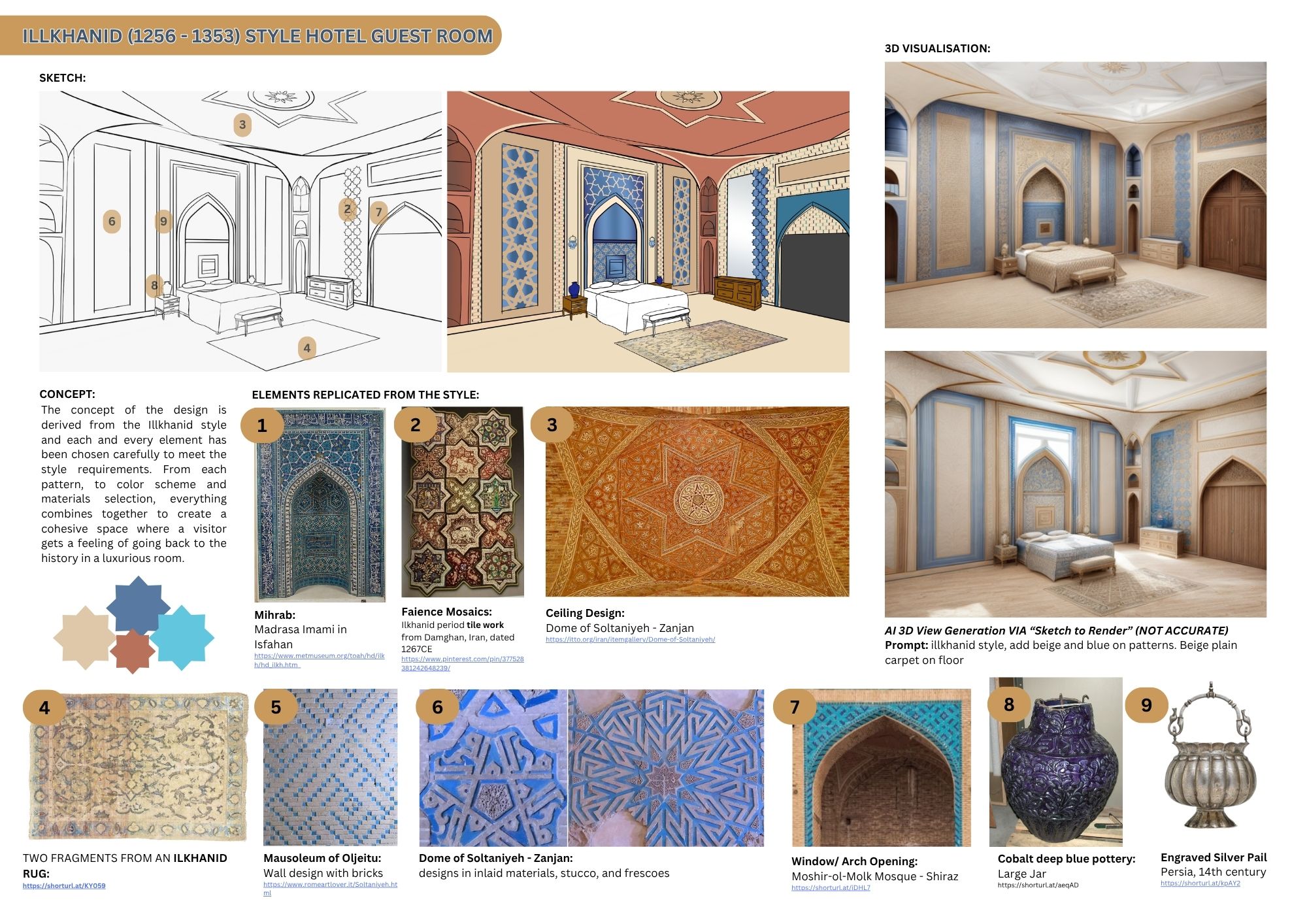
The Illkhanid style from 1256 to 1353 became the foundation of this guest room. Every element was carefully sourced from real historical references. The Mihrab from Madrasa Imami in Isfahan, the faience mosaics from the Dome of Soltaniyeh, and the iconic pointed arch windows. Nothing was decorative for the sake of it. Everything had a reason.
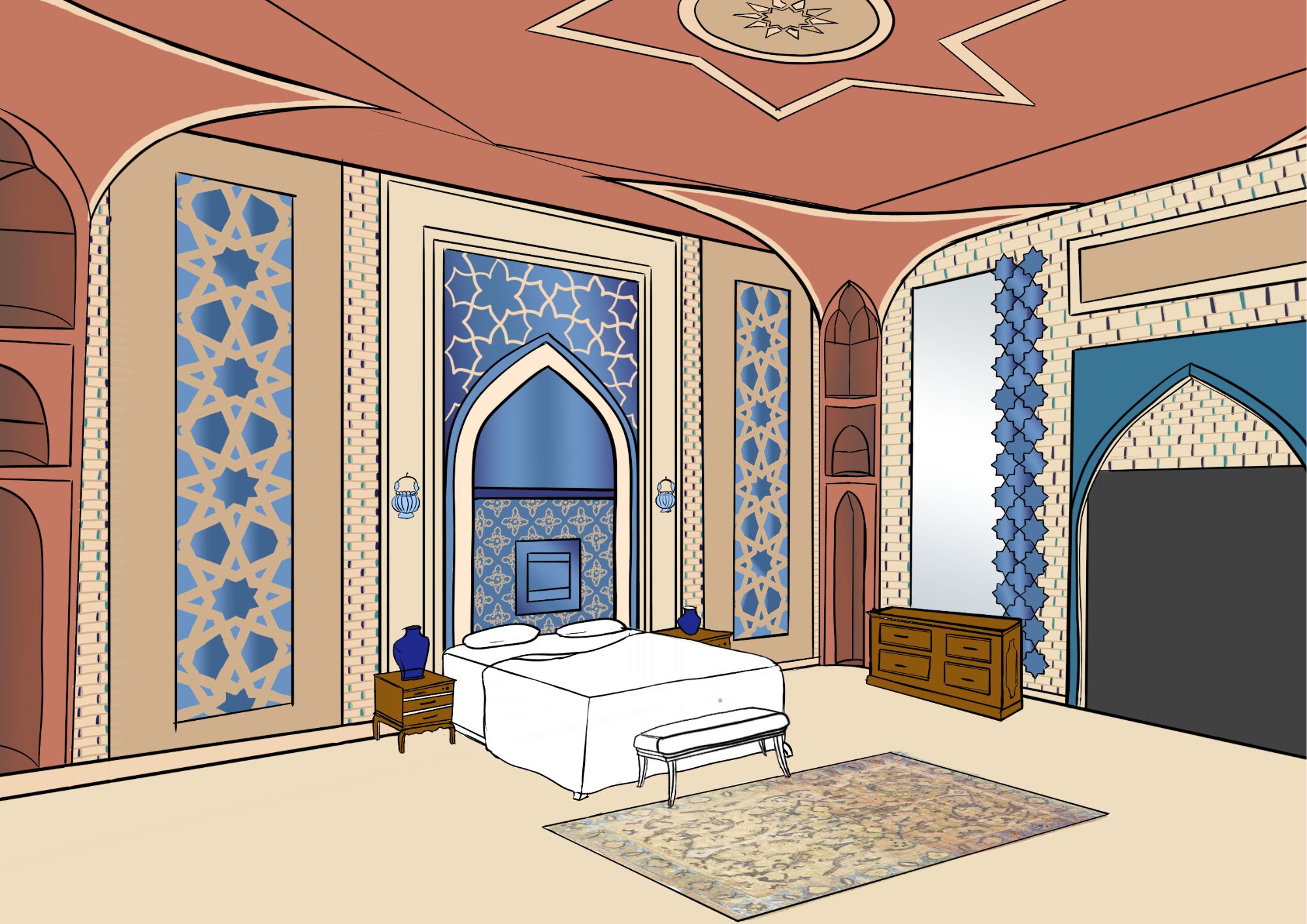
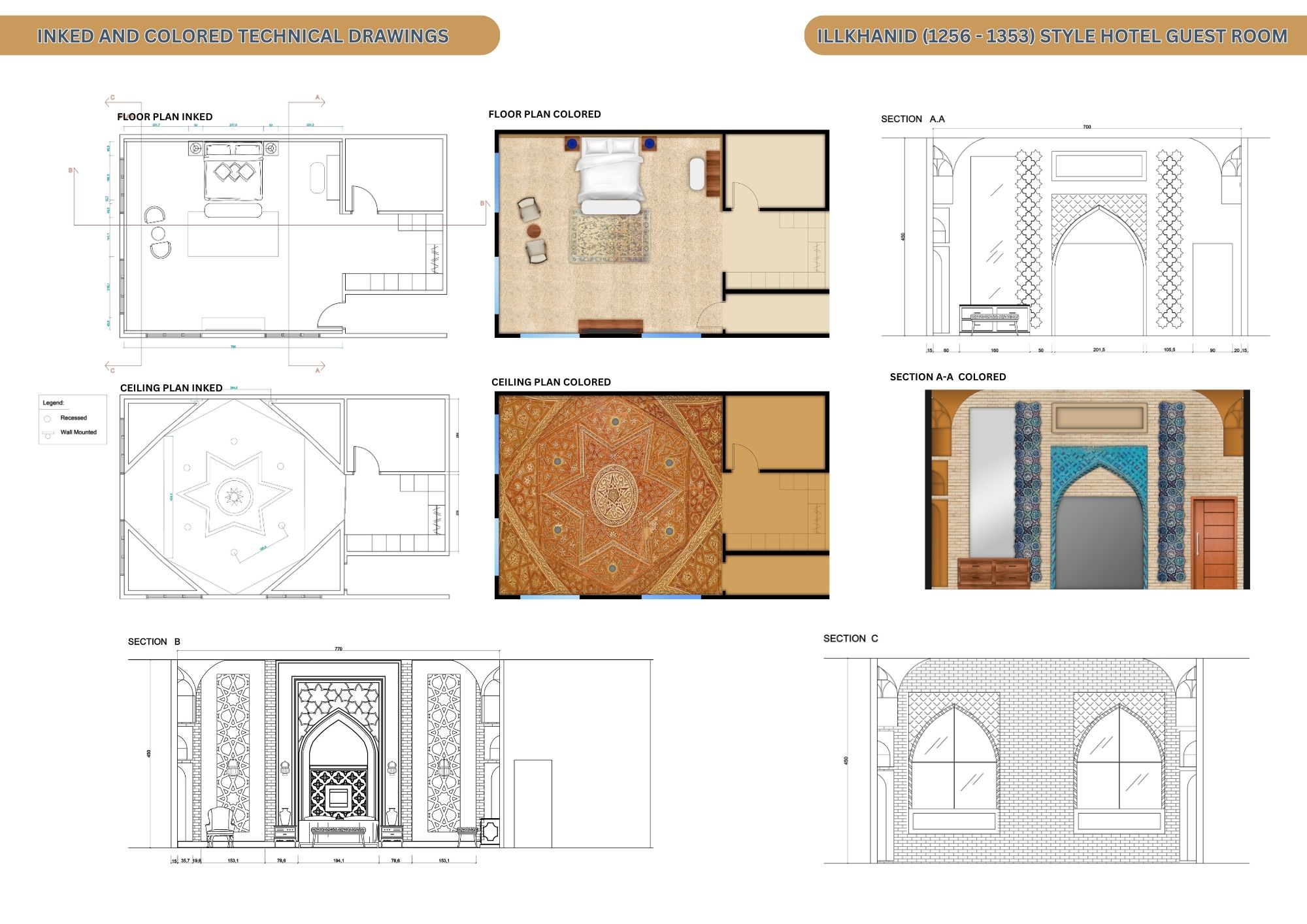
Once the concept was clear it was time to translate it into space. The star pattern from the Dome of Soltaniyeh became the ceiling. The arches became the walls. The Illkhanid rug became the floor. What started as historical research became a fully measurable and buildable room.
This is what conceptual design means to me. Not just inspiration boards and pretty references but a real commitment to understanding where a design comes from before deciding where it is going.
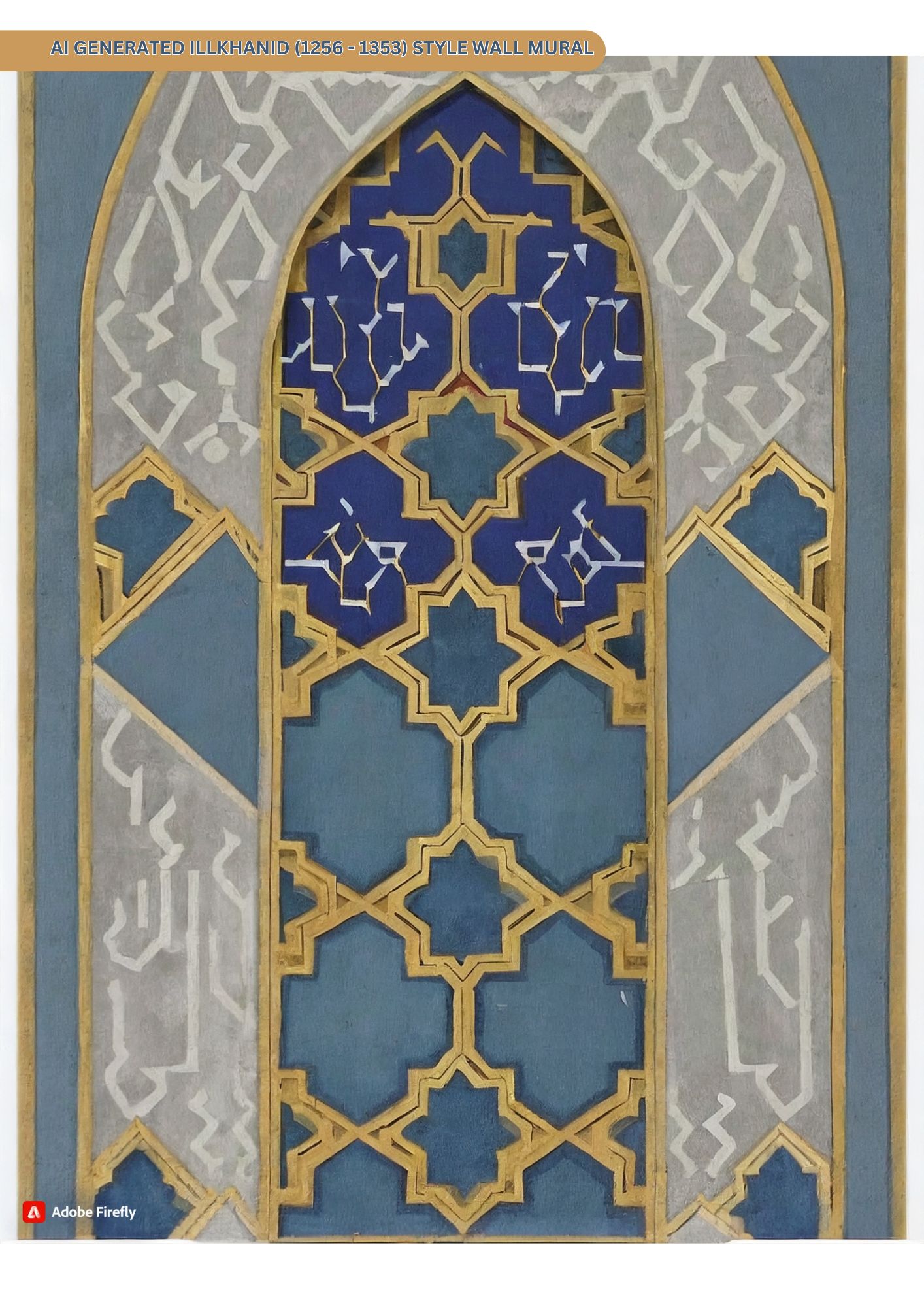
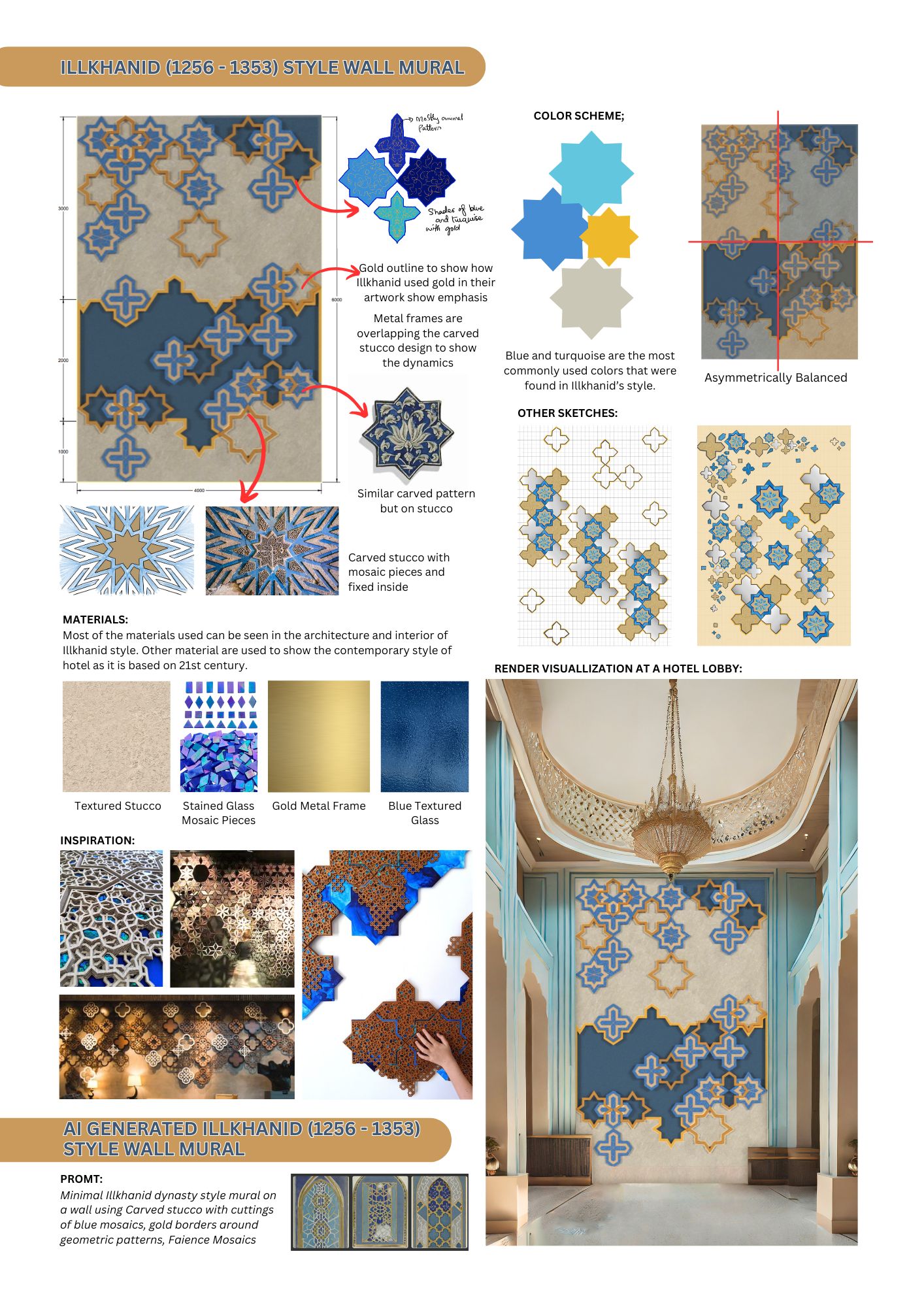
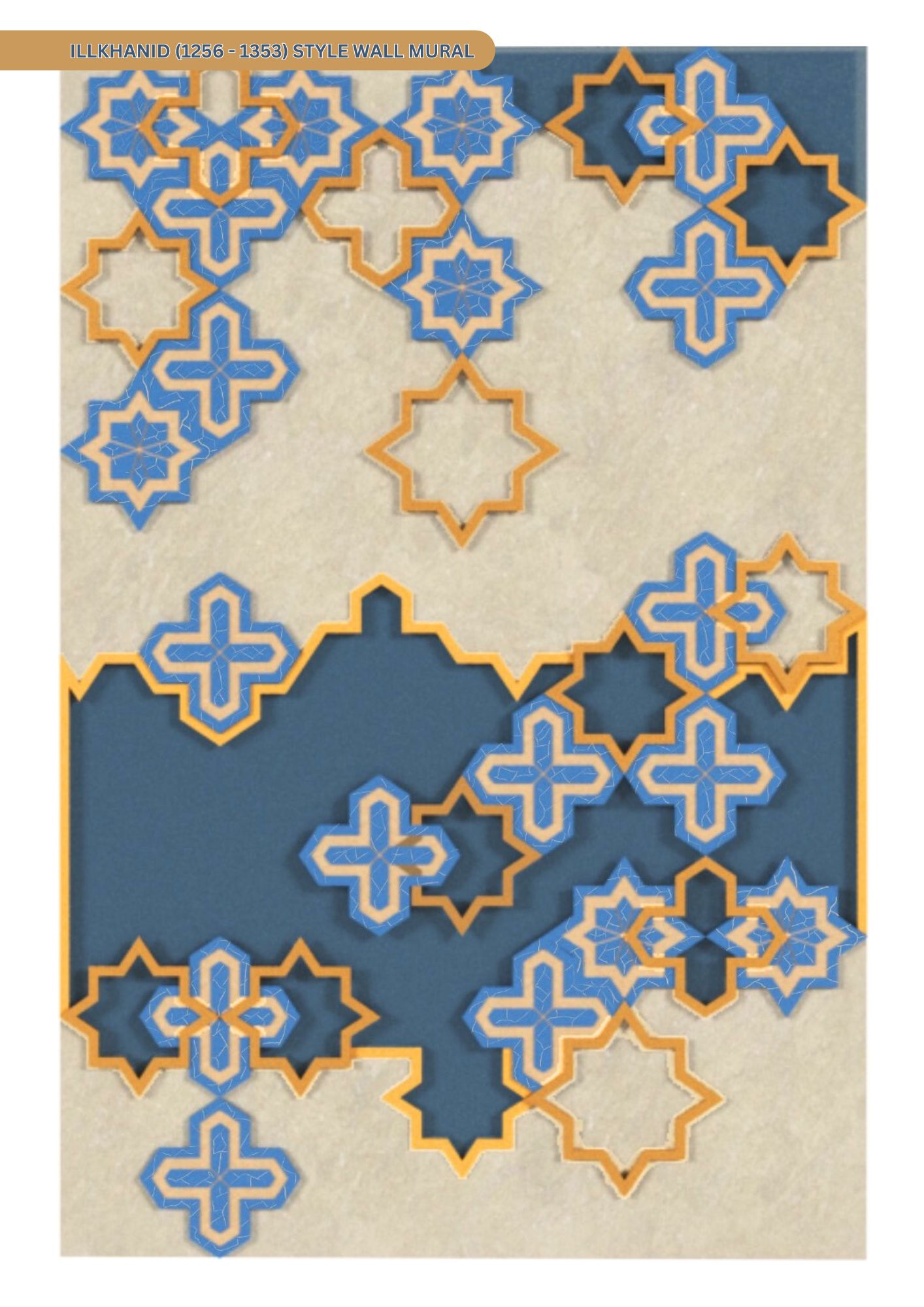
The wall mural took the same approach but pushed it further into surface and texture. Blue and turquoise sit against gold outlines, exactly as the Illkhanid craftsmen intended. Carved stucco layered with mosaic pieces, metal frames adding depth and movement. The pattern is asymmetrically balanced structured enough to feel intentional, free enough to feel alive.
More to Discover

Conceptual Design
Where ideas take shape early stage design thinking, pattern exploration, and the creative decisions that drive every project.
Tutorials
The Illkhanid style from 1256 to 1353 became the foundation of this guest room. Every element was carefully sourced from real historical references. The Mihrab from Madrasa Imami in Isfahan, the faience mosaics from the Dome of Soltaniyeh, and the iconic pointed arch windows. Nothing was decorative for the sake of it. Everything had a reason.
Once the concept was clear it was time to translate it into space. The star pattern from the Dome of Soltaniyeh became the ceiling. The arches became the walls. The Illkhanid rug became the floor. What started as historical research became a fully measurable and buildable room.
This is what conceptual design means to me. Not just inspiration boards and pretty references but a real commitment to understanding where a design comes from before deciding where it is going.
The wall mural took the same approach but pushed it further into surface and texture. Blue and turquoise sit against gold outlines, exactly as the Illkhanid craftsmen intended. Carved stucco layered with mosaic pieces, metal frames adding depth and movement. The pattern is asymmetrically balanced structured enough to feel intentional, free enough to feel alive.
More to Discover
Conceptual Design
Where ideas take shape early stage design thinking, pattern exploration, and the creative decisions that drive every project.
Tutorials
The Illkhanid style from 1256 to 1353 became the foundation of this guest room. Every element was carefully sourced from real historical references. The Mihrab from Madrasa Imami in Isfahan, the faience mosaics from the Dome of Soltaniyeh, and the iconic pointed arch windows. Nothing was decorative for the sake of it. Everything had a reason.
Once the concept was clear it was time to translate it into space. The star pattern from the Dome of Soltaniyeh became the ceiling. The arches became the walls. The Illkhanid rug became the floor. What started as historical research became a fully measurable and buildable room.
This is what conceptual design means to me. Not just inspiration boards and pretty references but a real commitment to understanding where a design comes from before deciding where it is going.
The wall mural took the same approach but pushed it further into surface and texture. Blue and turquoise sit against gold outlines, exactly as the Illkhanid craftsmen intended. Carved stucco layered with mosaic pieces, metal frames adding depth and movement. The pattern is asymmetrically balanced structured enough to feel intentional, free enough to feel alive.